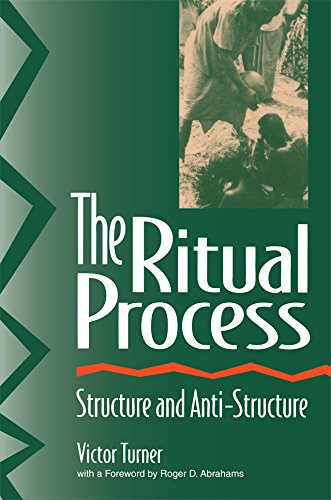
The Ritual Process: Structure and Anti-Structure by Victor Turner revolutionizes the study of rites by treating them as dynamic social practices rather than static customs. Based on his fieldwork with the Ndembu of Zambia, Turner introduces “liminality,” the transitional phase in rites of passage where participants lose their previous status but have not yet assumed their new one. In this threshold state, people experience “communitas,” a powerful sense of egalitarian togetherness that contrasts sharply with everyday social hierarchies. Turner frames ritual as a dialectic between “structure” (the enduring norms and roles of society) and “anti-structure” (the subversive, creative potential unleashed during liminality). He shows how rituals negotiate social tensions, reinforce group identity, and allow for innovation or critique of the status quo. Extending his model beyond coming-of-age ceremonies to healing, political, and religious rituals, Turner demonstrates that ritual is a vital mechanism for social cohesion, transformation, and renewal.

