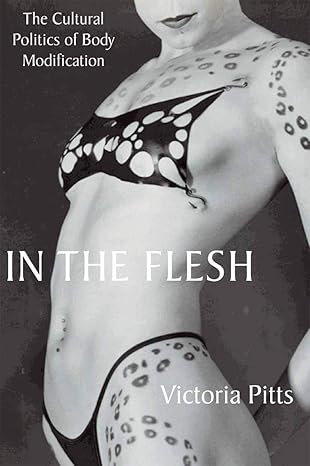
Victoria Pitts’ In the Flesh: The Cultural Politics of Body Modification is a foundational academic text that analyzes body modification as a site of complex social and political meaning. Rather than simply celebrating it as an act of rebellion, Pitts uses feminist and queer theory to explore how practices like tattooing, piercing, and scarification challenge dominant norms of gender, beauty, and the “natural” body.
The book examines the tension between modifiers who view their practices as acts of personal agency and self-creation, and the medical or psychological establishments that often pathologize these same acts. Pitts also investigates the cultural politics of the “modern primitive” movement and the effects of mainstreaming, questioning whether the subversive power of modification is diluted as it becomes more commercially popular.
Ultimately, In the Flesh argues that body modifiers are active agents who use their skin to negotiate identity, community, and resistance against social control. It treats the marked body as a text that can be read to understand deeper cultural struggles over who has the power to define and control the body.

